, , , e.a.

Phenotypic Switching

Implications in Biology and Medicine

Paperback Engels 2020 9780128179963
Levertijd ongeveer 9 werkdagen
Gratis verzonden

Samenvatting

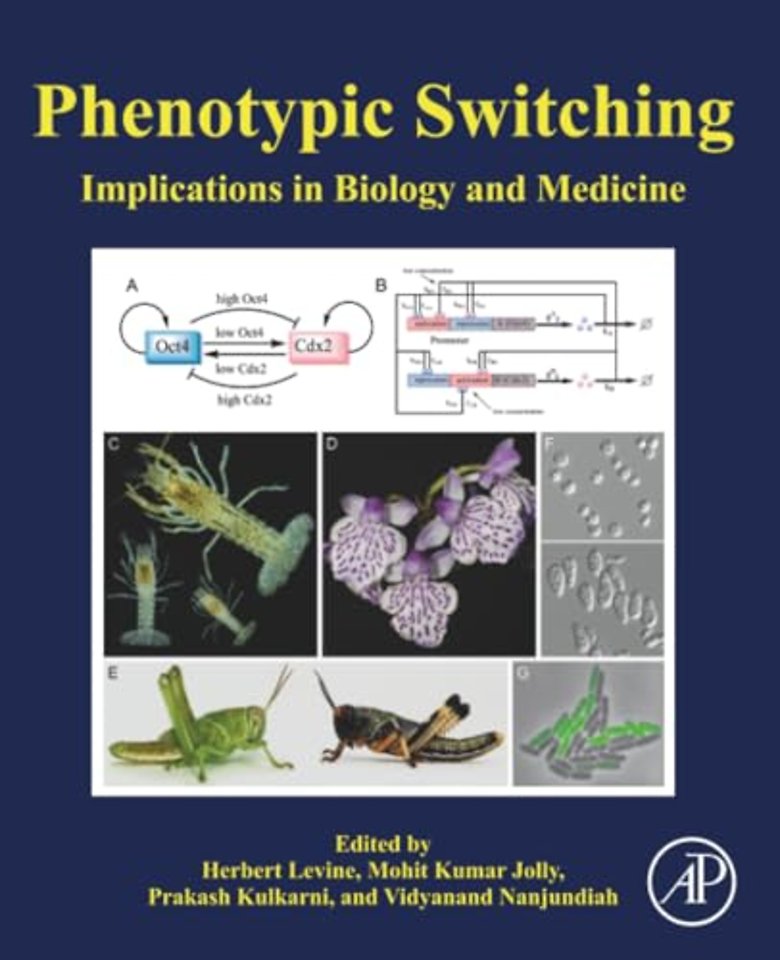
Phenotypic Switching: Implications in Biology and Medicine provides a comprehensive examination of phenotypic switching across biological systems, including underlying mechanisms, evolutionary significance, and its role in biomedical science. Contributions from international leaders discuss conceptual and theoretical aspects of phenotypic plasticity, its influence over biological development, differentiation, biodiversity, and potential applications in cancer therapy, regenerative medicine and stem cell therapy, among other treatments. Chapters discuss fundamental mechanisms of phenotypic switching, including transition states, cell fate decisions, epigenetic factors, stochasticity, protein-based inheritance, specific areas of human development and disease relevance, phenotypic plasticity in melanoma, prostate cancer, breast cancer, non-genetic heterogeneity in cancer, hepatitis C, and more.

This book is essential for active researchers, basic and translational scientists, clinicians, postgraduates and students in genetics, human genomics, pathology, bioinformatics, developmental biology, evolutionary biology and adaptive opportunities in yeast.

Specificaties

ISBN13:9780128179963
Taal:Engels
Bindwijze:Paperback

Lezersrecensies

Wees de eerste die een lezersrecensie schrijft!

Inhoudsopgave

<p>1. The fundamentals of phenotypic plasticity</p> <p>2. Rethinking the role of chance in the explanation of cell differentiation</p> <p>3. Random walk across the epigenetic landscape</p> <p>4. Maneuvering protein functions and functional levels by structural excursions</p> <p>5. Prion-mediated phenotypic diversity in fungi</p> <p>6. Bistability in virus - host interaction networks underlies the succes of hepatitis C treatments</p> <p>7. Quantifyinh Waddington landscapes, paths, and kinetics of cell fate decision making of differentiation/development</p> <p>8. The physics of cell fate</p> <p>9. Disentangling the environmentally induced and stochastic development components of phenotypic variation</p> <p>10. The evolution of cell differentiation in animals: biomolecular condensates as amplification hubs of inherent cell functions</p> <p>11. Phenotypic switching and its evolutionary consequences</p> <p>12. Cell-state organization by exploratory sloppy dynamics</p> <p>13. Emergence of metabolic heterogeneity in cell populations: lessons from budding yeast</p> <p>14. Stochastic phenotypic switching in endothelial cell heterogeneity</p> <p>15. Regulation of phenotypic plasticity from the perspective of evolutionary developmental biology</p> <p>16. Phenotypic plasticity and the origins of novelty</p> <p>17. Niche construction and the transition to herbivory: Phenotype switching and the organization of new nutritional modes</p> <p>18. NAture, nurture, and noise in bird song ontogeny as determinants of phenotypic and functional variation among dialects</p> <p>19. Domestication as a process generating phenotypic diversity</p> <p>20. The glycobiology of ovarian cnacer progression: phenotypic switches an microenvironmental influences</p> <p>21.Epithelia-mesenchymal transition in cancer</p> <p>22. Phenotypic switching and prostate diseases: a model proposing a causal link benign prostatic hyperplasia and prostate cancer</p> <p>23. Phenotypic plasticty and lineage switching in prostate cancer</p> <p>24. Implications of non-genetic heterogeneity in cancer drug resistance and malignant progression</p> <p>25. Phenotypic plasticity: the emergence of cancer stem cells and collective cell migration</p> <p>26. Adaptive phenotypic switching in breast cancer in response to matric deprivation</p> <p>27. Phenotypic instability induced by tissue disuption at the origin of cancer</p> <p>28. Evolutionary strategies to overcome cancer cell resistance ot treatment</p>

Managementboek Top 100

Rubrieken

    Personen

      Trefwoorden

        Phenotypic Switching